
For years, AI was treated like a glorified calculator: reactive, time-bound, and forgetful. It answered FAQs, sorted invoices, and helped… a little.
Now AI is stepping out of the toolbox and into the org chart. Welcome to the age of agentic AI – intelligent systems that don’t just react, but act. They plan, decide, and collaborate. They remember, adapt, and are accountable for outcomes.
They don’t behave like tools.They behave like colleagues.And that changes everything.
We are witnessing a quiet revolution. AI is no longer just solving tasks – it is taking on roles.
These agents come with responsibilities, KPIs, and even personalities. They don’t just fill gaps; they take ownership of work that no one else can sustainably handle. And like any other team member, they need structure, accountability, and support.
If agentic AI is part of your team, it should be managed like one:
This is not a nice-to-have.It is the foundation for trust, scalability, and governance in the age of intelligent automation.
But structure alone is not enough. Just like their human colleagues, digital agents can only succeed and deliver real value if they are truly integrated into the team. They need more than access. They need purpose, alignment, and a clear role in the bigger picture. How we integrate AI is just as important as how we manage it.
Horizontal is easy. Vertical is transformativeMany organizations start with horizontal AI – adding a chatbot to a process or inserting a summary into a workflow. It’s fast, but shallow.
Real value lies in vertical integration: rethinking entire processes with AI at the core.
Imagine an AI agent that doesn’t just assist with customer onboarding, but coordinates the entire journey – validating documents, triggering workflows, monitoring SLAs, and checking for NDA conflicts.
This is not an add-on. It is a co-designed transformation. AI becomes a trusted partner that orchestrates outcomes, aligns teams, and unlocks new potential across the entire journey.
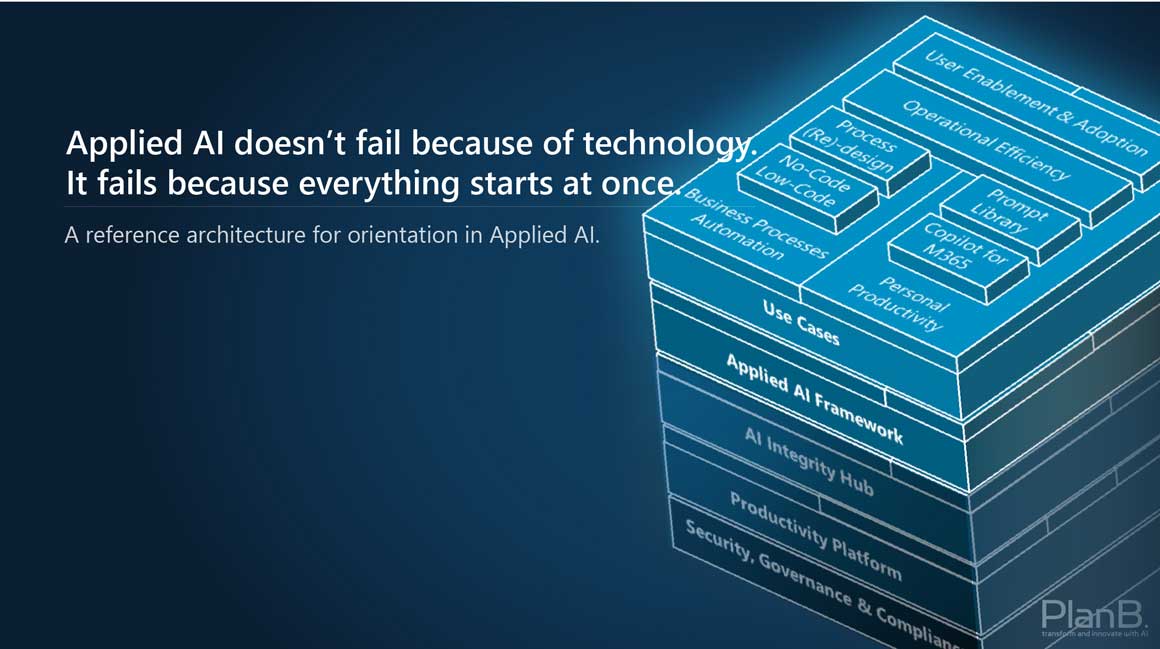
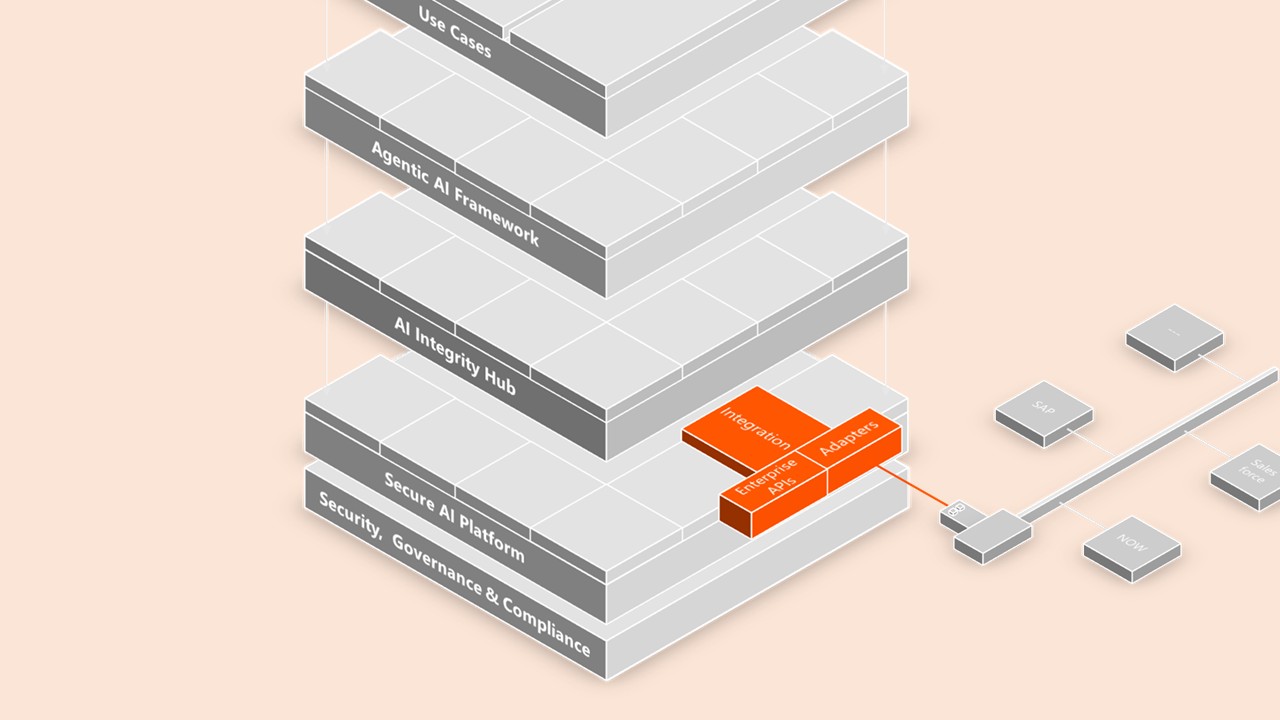
At PlanB., we developed the AI Enablement Platform – a composable architecture designed to support this shift. It provides the foundation for managing digital colleagues securely, transparently, and efficiently.
Whether you deploy one agent or a hundred, the platform ensures they are embedded, managed, and aligned like any other team member – always under human oversight to ensure sensitive actions are handled with care and compliance.
AI no longer just supports work – it takes on parts of it. But unlocking its full potential requires more than infrastructure. Organizations need a clear strategy to manage intelligence at scale – securely, compliantly, and adaptively. Those that embrace this shift structurally and culturally will shape the next wave of innovation.